Why fountain lines die during Fresno heat waves, how to read the gauge that lies to you, and what same-day delivery actually looks like on the 99 corridor.
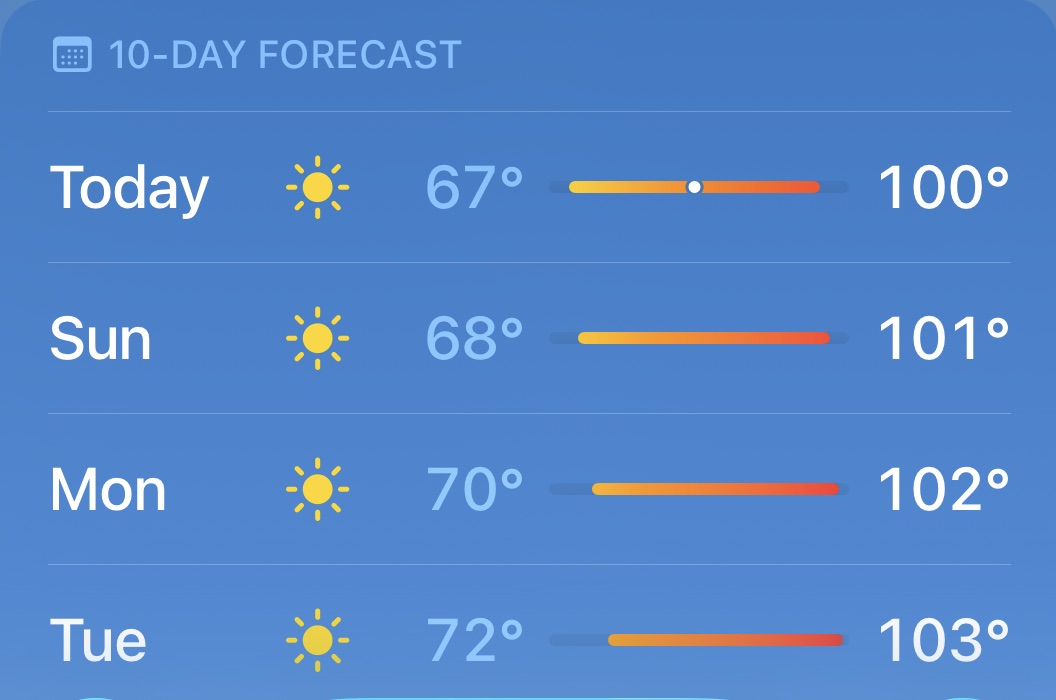
The July heat dome is the single biggest killer of fountain service in this city. Fresno strings together 15 to 20 triple-digit days most summers, soda and agua fresca volume at restaurants along Blackstone and Olive roughly doubles, and tanks that normally last three weeks empty in ten days. We field the panic calls every year, and most of them were preventable with a smarter approach to CO2 tank refill in Fresno: knowing how to read your gauge, knowing your burn rate, and knowing your supplier's same-day cutoff before you need it.
Your Gauge Lies Until the Tank Is Almost Empty
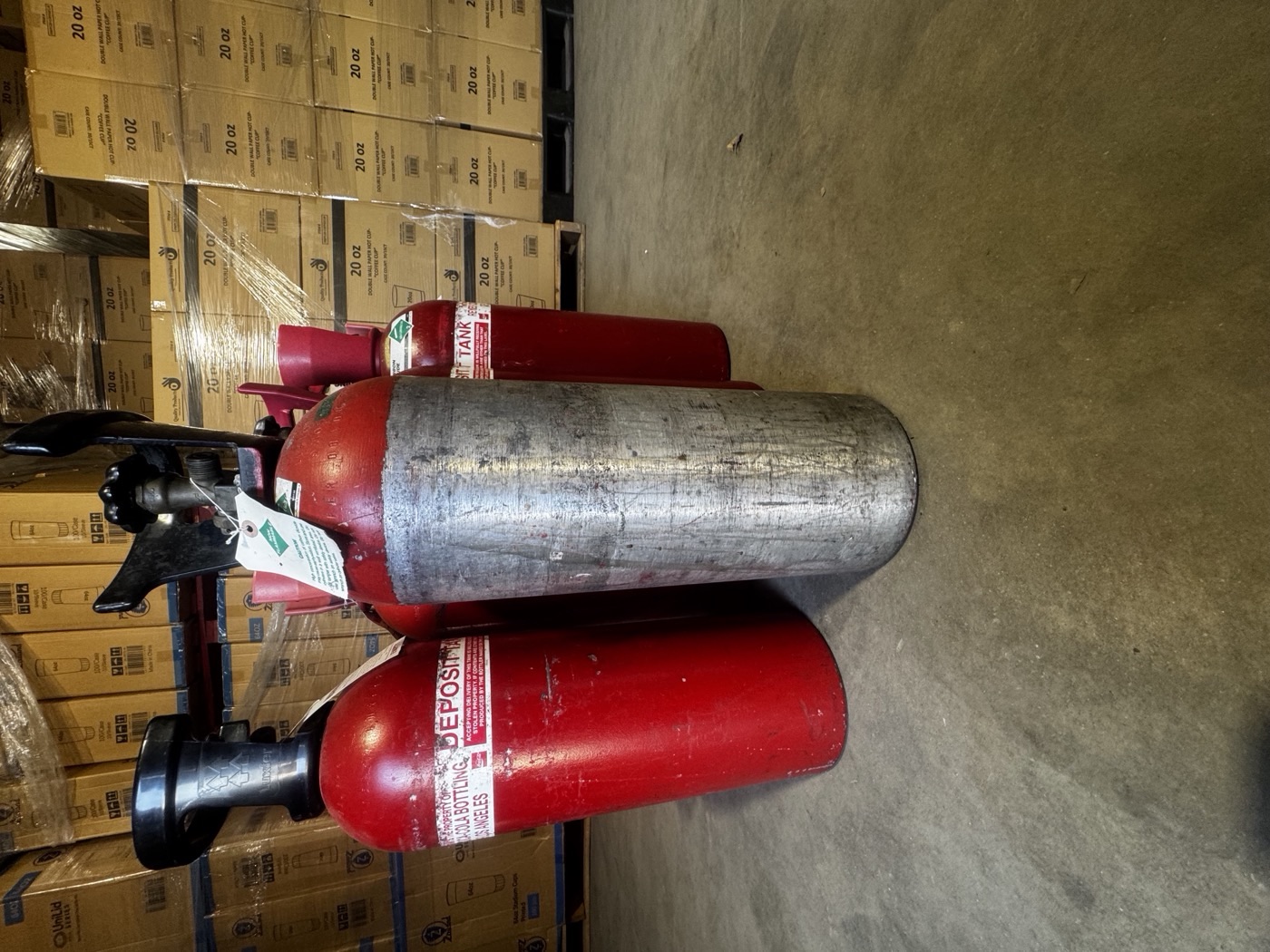
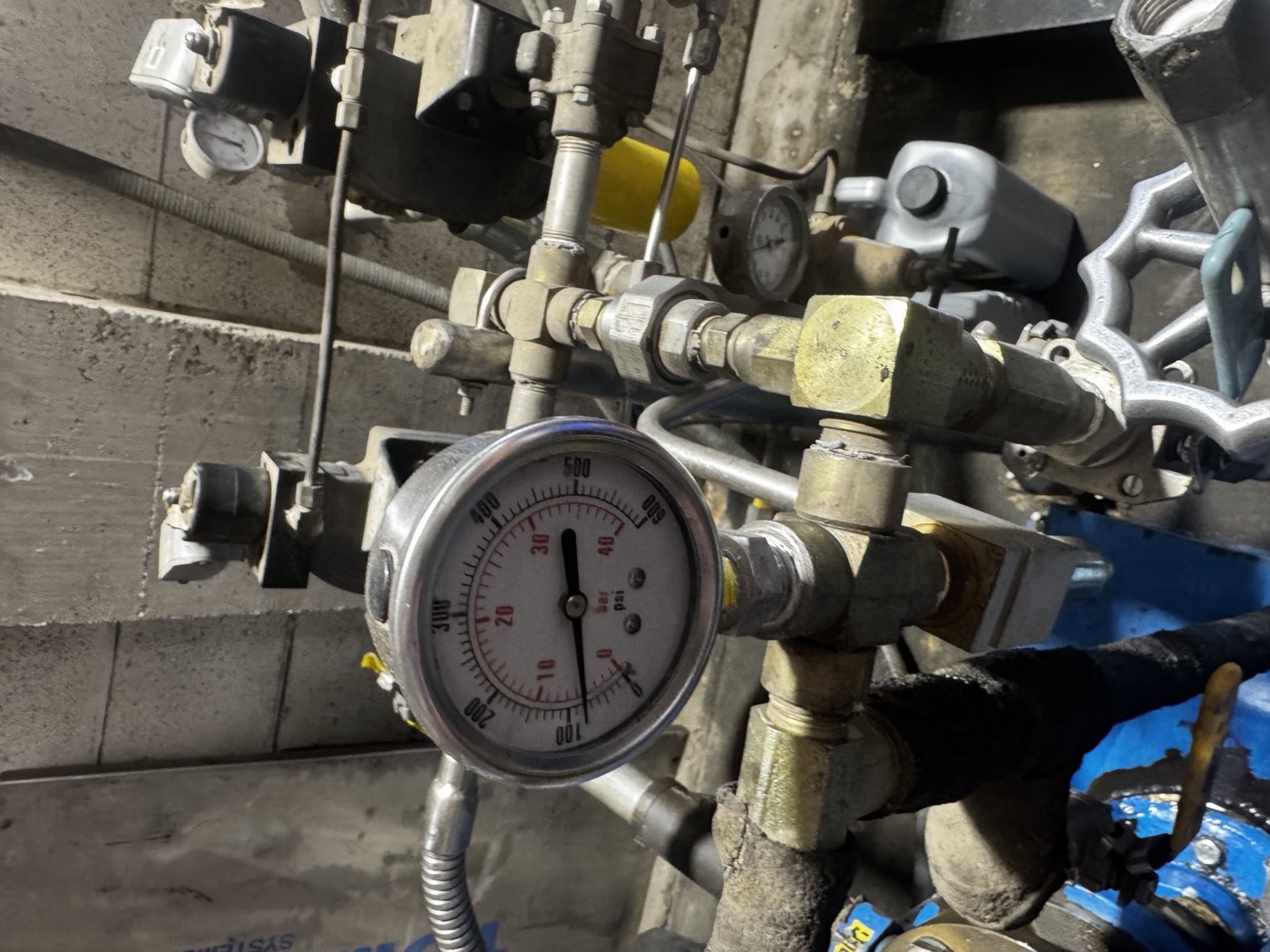
A CO2 tank holds liquid, not just gas. As long as any liquid remains, the pressure gauge reads roughly 850 psi at 70 degrees no matter how full the tank is. A tank at 90 percent and a tank at 10 percent show the same number.
The gauge only starts dropping once the liquid is gone and you are burning residual vapor. At that point a high-volume operation has hours left, not days. A taqueria running two fountain heads hard on a Saturday can drain that vapor cushion before the lunch rush ends.
Fresno heat makes it worse. A tank stored in an unventilated back room that hits 100 degrees in August reads higher psi than the same tank at 70 degrees, which convinces operators they have more gas than they do. We've seen kitchens off Shaw where the back storage room runs 15 degrees hotter than the dining room all summer.
The fix is weight or schedule, not pressure. Every cylinder has its empty tare weight stamped on the collar; a 20 lb tank full weighs tare plus 20. Weigh it weekly, learn your burn rate, and reorder when a third of the gas remains. If your gauge has started falling, you are already late.
Key Takeaway
Pressure tells you nothing about fill level until you're nearly empty; track tank weight or a fixed reorder schedule instead, and treat a falling gauge as an emergency.
Is Your Carbon Dioxide Supplier Actually Sending Food Grade Gas?
Food grade and industrial CO2 are the same molecule with different paperwork, and the paperwork matters. Beverage grade CO2 meets ISBT purity standards, 99.9 percent minimum, batch-tested for benzene, acetaldehyde, sulfur compounds, and oil carryover. Industrial CO2 carries no such testing and can come from sources where those contaminants ride along.
Those contaminants end up in the drink. Gas dissolves directly into the water in your carbonator, so a tainted fill puts benzene or sulfur notes straight into every soda you pour. If your fountain drinks taste flat-sour or faintly chemical and your syrup ratios check out, audit the gas before you blame the machine.
The audit is simple. Ask your supplier for a Certificate of Analysis tied to the batch that filled your cylinder. A legitimate carbon dioxide supplier produces it on request without friction. Check the cylinder itself for food grade or beverage grade labeling, not just a generic hazmat sticker.
This is a real problem in the Valley, not a hypothetical. Small restaurants sometimes end up buying refills from welding supply counters because the price looks good, and welding shops stock industrial gas because that is their business. It is legal for them to sell it. It is not fine in your carbonator.
Key Takeaway
Demand a Certificate of Analysis and beverage-grade labeling on every fill; a supplier who can't produce one is selling you welding gas.
A Valve Leak at 6 p.m.: The First Ten Minutes
A hissing CO2 tank during dinner service is the call we get most in summer, and the response order matters. CO2 is heavier than air, so it pools at floor level and in low enclosed spaces. In a small back room or a basement storage area, a full tank venting fast can displace enough oxygen to be dangerous. Older Tower District buildings with below-grade storage are the exact setup where this goes wrong.
Here is the sequence:
Close the tank valve fully clockwise. Most 'leaks' are a valve that was never seated all the way or a loose regulator connection, and this stops them cold.
Ventilate immediately: prop the back door, run any exhaust fan. Get people out of small enclosed rooms until the hissing stops.
Find the leak with soapy water on the valve stem, the regulator nut, and the safety disc. Bubbles mark the spot.
If it bubbles at the regulator nut, back it off and check the nylon washer; a missing or cracked washer causes about half the valve-area leaks we see. Reseat and retighten.
If it bubbles at the valve stem or safety disc with the valve closed, stop. Do not wrench on it. Move the tank outdoors if you can do so safely and tag it for swap.
Call your supplier for a same-day exchange. A leaking cylinder is their problem to fix, not yours to repair.
How Same-Day CO2 Delivery Actually Works From Madera to Visalia
Same-day CO2 delivery in the Central Valley is real, but it runs on route logic, and understanding that logic is how you never miss a shift. Distribution routes here follow the 99: Madera down through Fresno and Clovis, then Selma, Kingsburg, and on to Visalia. A Fig Garden restaurant calling at 10 a.m. for a tank before the dinner shift is an easy yes. The same call at 4:30 p.m. depends on where the truck already is.
Ask your supplier three things before you ever need an emergency: the same-day cutoff time, whether your address is on a daily route or a scheduled day, and whether will-call pickup is an option when you miss the window. If the answer to all three is a call center in another state, you have the wrong supplier for a fountain-dependent business.
New accounts should also ask about first-delivery lead time. A local distributor can typically set up a new restaurant account and land the first tanks in one to two business days; the national gas companies often quote a week or more plus a contract. That gap is the whole argument for staying local on CO2 tank refill in Fresno. We hold the lowest CO2 price in Fresno, and there is no contract lock-in behind it.
The operators who never run dry do one thing differently: they keep a full backup tank on site and swap it into the rotation. One spare cylinder costs less than one Saturday of dead fountain heads.
Key Takeaway
Learn your supplier's same-day cutoff and route day now, and keep one full backup cylinder on site; the spare costs less than a single lost weekend of fountain sales.
Nitrogen Won't Carbonate Your Water, and Other Reasons to Talk to Your CO2 Distributor
Bars around Fresno keep asking about nitrogen for sparkling water, so let's settle it. Nitrogen barely dissolves in water; CO2 dissolves readily and forms the carbonic acid that gives soda and sparkling water their bite. Nitrogen has one job in beverages: the creamy cascade in nitro cold brew and stout-style pours. If you want bubbles, you want CO2, full stop.
Blended gas has its place. Long-draw draft systems, the kind running 25 feet or more from a walk-in cooler to the tap, often use a 70/30 nitrogen-CO2 blend to push beer without overcarbonating it. If you are pouring foam off a long run, the gas blend is the first suspect, and a good CO2 distributor will talk you through it instead of just dropping tanks.
Switching distributors is smaller than most operators think. Have three things ready: how many cylinders you run and their sizes, your connection type (CGA-320 is standard on beverage CO2), and your rough weekly volume. With those in hand, a new local account goes from first call to first delivery in a couple of days, no contract fight required.
Quality Beverage & Paper Distribution has run these routes as a family operation out of Fresno for decades, which is why the person answering the phone knows what a carbonator is. That sounds minor until you are troubleshooting a pressure problem at 5 p.m. on a Friday.
The Bottom Line
Weigh your tanks instead of trusting the gauge, verify your gas is beverage grade with a Certificate of Analysis, and keep one full spare on site before the next 105-degree weekend hits. For same-day CO2 tank refill in Fresno and delivery along the 99 from Madera to Visalia, call Quality Beverage & Paper Distribution at (559) 445-3105 and ask about the same-day cutoff for your address.
Common Questions
Frequently Asked Questions
You mostly can't, and that's the trap. The gauge reads around 850 psi at room temperature whether the tank is 90 percent full or 10 percent full, because it measures vapor pressure over liquid CO2. Weigh the cylinder instead: subtract the tare weight stamped on the collar, and reorder when a third of the gas remains. If the gauge itself has started dropping, the liquid is gone and you have hours, not days.
Set the primary regulator to 100-105 psi for the carbonator and the secondary output to 60-80 psi for the bag-in-box syrup pumps. Draft beer is a different animal entirely at 12-14 psi. If drinks pour flat at correct pressure, check the carbonator and gas quality before turning anything up.
The routes run the 99 corridor well beyond Fresno: Madera, Fresno, Clovis, Selma, Kingsburg, and down to Visalia. Same-day availability inside the Fresno-Clovis metro depends on when you call relative to the daily cutoff. Call (559) 445-3105 with your address and they'll tell you your route day and cutoff time straight.
Talk to Us
Call, Text, or Send the Order List
No sales pitch, just straight answers. And it is not just restaurants and corner stores: grow operations, dispensaries, ag outfits, and event crews that buy CO2 or cups in volume from a welding-gas counter can get it delivered on a route instead.